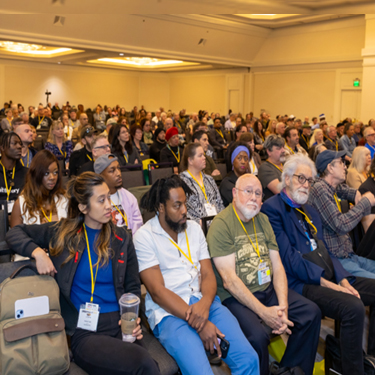
Video Game Composers Panel – 2009 TAXI Road Rally


Video Game Composers Panel

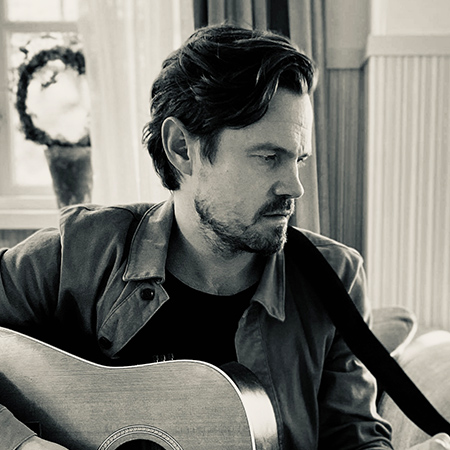
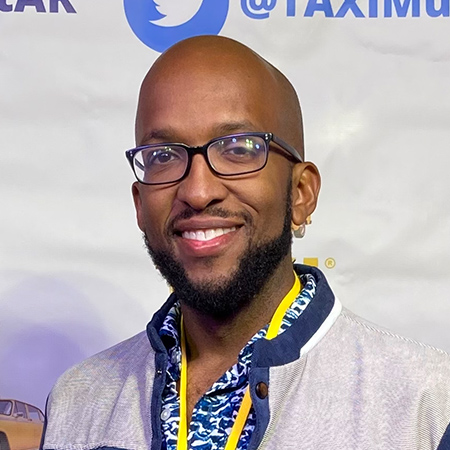
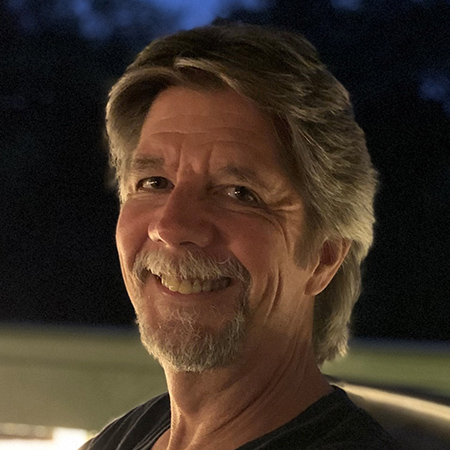
Video Game Composer panelists, Sascha Dikiciyan, Bob Rice, (moderator) Michael Laskow,
Inon Zur, and Cris Velasco pose for a post panel shot at TAXI's 2009 Road Rally.


Moderated by Michael Laskow

I'm unbelievably excited to have these guys here today. These guys are three of the top video game composers on the planet Earth, and you will rarely get a chance to learn what they know and hear from them directly. [applause]

Also joining us today is the gentleman in front of me, Mr. Bob Rice. Bob is the founder and CEO of FBI, Four Bars Intertainment. He's been in the music business since he was 15, and had his own record label at the age of 16. In the video game industry, Bob created and executive produced the world's first Rock 'n' Roll video game called Journey Escape. Today, FBI is the largest provider of original music for video games. Please welcome my all too modest friend, the one, the only, Mr. Bob Rice. [applause]

Inon Zur composes emotionally dynamic music for feature films, television, movie trailers, anime, and video games. Inon is currently scoring projects for Ubi-Soft, Warner Bros., and Sony Online Entertainment, as well as writing and producing music for APM, Bruton, and X-Ray Dog Music libraries. He has composed music for movie trailers for X-Men: Origins, Wolverine, Escape to Witch Mountain—which I've seen four times with my kids—Harry Potter and the Order of the Phoenix, and many, many more. Please welcome Mr. Inon Zur. [applause]

And let this bio semi-serve to also introduce the gentleman on your far right, whose name is Cris Velasco, who just showed up with these guys today. I'm thrilled to have him here. I asked him if he wanted to join us for the panel, and he said, "No, it's cool." And I said, "Come on, do the panel." So he said "OK."

Cris works hand in hand very frequently with the gentleman in front of me, whose name is Sascha Dikiciyan. Sascha is one of the most sought after composers of the video game music industry today. His interest in video games began in the early '80s, compelling him to independently produce and release Methods of Destruction, the first ever, audio add-on for the original Quake in 1996. His innovative work captured the interest of IB Software, who recruited him to compose original music for Quake II. In 2005 Sasha teamed up with the aforementioned Chris Velasco, composer for such games as God of War I and II, and Marvel: Ultimate Alliance. The pair quickly became known for their ground-breaking hybrid style, combining orchestral scores with electronic industrial beats. Together, the two have collaborated on more than a dozen game titles including Dark Messiah, Splinter Cell 4, Beowulf, Haze, Hellgate: London, and the just-released Borderlands. Oops, I left Prototype out of there as well. Please welcome Mr. Sascha Dikiciyan and Mr. Cris Velasco. [applause]

Welcome gentlemen. I am delighted that you were all able to join us today.

I recently found out that the video game industry has now surpassed the film industry. It's a $52 billion industry—$52 billion a year. And that's without any "stimulus" money. That blows me away.

Bob, does the video game industry treat composers like the film and TV industries in that they always seem to be standing at the end of the line getting the smallest piece of the pie?

Is it the old "We're out of budget; what can you do the music for?" Do the guys who are doing video game music get treated that way, or with a little more respect, I hope?

Bob: Music is always post-production, "We're out of money." "We're out of time," yada yada yada." You all know that story. Candidly, I think that the top composers such as the three gentlemen sitting here with me today are treated with a lot more respect than I would say the top composers from film and television. And it really is because, I think, there is a lot more communication between the customer and the company. Because, you know, you see a film, you like the music, that's it. You see a TV show, you like the music or whatever and that's it. In the video game business, you have a lot of feedback, you have a lot of fan pages, you have a lot of Web sites for the various different games, such as Prototype. So the fans will go to those Web sites and say, "Oh my God, the music was great. Who is that composer? Do they have a Web site? Do they sell CDs? Are they on iTunes?" So I think because of that instant feedback from the customers, if you will—the target audience, the consumers—the companies understand the contribution that these gentlemen make to the world of video games, so I think they do get a little bit more respect.

Nice to hear. Refreshing to hear. Inon, did you start out wanting to be a video game composer specifically, or just purely a composer? Tell us about your career path. Inon: Well, I didn't start out as a video game composer, although I'm quite proud to say today that I am a video game composer. I started composing a lot of TV episodes for kids. I worked as a staff composer for Fox Kids between '94 and 2000. All the ones that you don't want to see, like Power Rangers, Beetleborgs, Eskaflona, and all the rest of them are definitely a labor of love or... Never mind. But one good thing that it gave me, it gave me a lot of craft and the ability to work with synthesizers with MIDI, and especially to work fast. In 1996, I think, I got a phone call from a gentleman who has a very radio-phonic voice [Bob], and he says, "Would you like to do music for a video game?" And I said, "No, thank you." And that was pretty much the end of it. But Bob was very, very persistent and he told me that I was going to record orchestras, that there's a lot involved like orchestrations, a lot about art. And I said, "Yes, yes." And [he said] it pays this and this per minute, and I said, "Sure." So this is pretty much how it all started. Since then, I think I've composed over 50 titles, and I am very happy in this field.

I was going to ask later, but I might as well ask now because the topic just came up. How much does it pay per minute?
Inon:
Shall I say? Well, if my name is Hans Zimmer, then about $400,000 a minute. If my name is Inon Zur, it usually ranges anywhere between $1,000 a minute to $2,500 a minute.

Wow, that's substantial.
Bob:
I'd like to elaborate on this a little bit, because I'm sure everybody has a lot of interest in that. It depends on a number of different things, obviously, much like film and television. If it's a top title, a franchised title, they've got a bigger budget, not only for the creative fee, but for the production fee—meaning live music—so on and so forth. Then, of course, the second thing is the caliber and the celebrity of the particular composer. And going back to what you were talking about, the respect given to the composers, I really don't find it interesting, but, when you talk about the celebrity of film and TV people, they don't know. The consumers don't know, you know. I mean, if you walk around... They might know Danny Elfmann from Oingo Boingo, but beyond that, if you stand outside a theater and you say, "Hey, what do you think of James
  Bob Rice
  “Be open to construc-
tive criticism, and don't resist it, embrace it.“
– Bob Rice
Horner?" or "What do you think of Allen Silvestri?" or "What do you think of Hans Zimmer?" "Don't know." You go to a video game store, stand out in front and say, "What do you think of Cris and Sascha?" Wow, they will know the games they scored, so on and so forth. "What do you think of Inon Zur?" Same thing. So in the pricing and the income, what also comes into play—not only if it's a franchise title or it has a big budget—but is it a celebrity composer such as Cris, Sascha, and Inon? Yes, that adds to the salability. It's a PR aspect that they can play into the medium, so on and so forth.

But to go back to the answer to the question, video games will pay ranging from for a low-budget kids game, all sampled music, $800 a minute, typically doing, let's call it, 30 minutes per game. In the franchise titles for a start-up composer, probably $1,000 a minute. For a medium-ranked composer, if you will, $1,200 a minute. And for people like these gentlemen, you're talking in the $2,500-per-minute range. And, typically, they'll also give these gentlemen a live-music budget as well.

Sascha, so they give you a fee on top of your creative fee to cover the cost of hiring a live orchestra and the studio costs, etc.?
Sascha:
Well, that is the creative fee, which is pretty much our fee that we charge for writing the actual score. And then you have the production fee, which is going to be the orchestra, the orchestration, you know, booking all the musicians and all the stuff. It really varies, and I think Cris knows a lot more about that than I do—about actual numbers.

How much of it is done with live musicians? If you're doing something like what we just heard, will you use 80 pieces with strings, horns—the real deal—it's not all synth-generated or virtual instruments?
Sascha:
Yeah, it all comes back to the budget. If the budget is there, then we try to get an average of 65 people for the orchestra we record with. Then we do a lot of doubling to make it sound like it's more people, obviously. It all depends on the budget of the developer, if they want to spend the money.

So Cris, when you score something and you know that you've got a budget to work with live musicians and you're going to have 65 pieces in the room, when you started out, did you learn how to conduct an orchestra? Did you learn how to write charts? Did you have to develop all of those skills before you could do video games? Or did you develop it all on a keyboard and then learn how to translate it into a room full of live musicians?
Cris:
No, I actually studied music at UCLA and got my degree in composition, so I did study orchestration and conducting. And I did do that for a while when I first started games, but I learned that usually there's not a lot of time. I really felt this more on the composition side of things, so Sascha and I have kind of developed a team. We use orchestrators and copyists and conductors.


“If the budget is there, then we try to get an average of 65 people for the orchestra we record with.” – Sascha Dikiciyan


Sascha, tell us more about how you two work together.
Sascha:
I come from an electronic music background... I'm originally from Germany, so I grew up with the industrial movement over there-a little bit of an electronic scene, obviously. So I'm kind of bringing that to the table, the engineering sides, all the percussion, all the custom sound design, which we put a lot of pride into that, doing like a custom palate for each game. We do go to crazy lengths to really make it sound unique. Then, Cris is doing the orchestra, obviously, but we have sort of like developed this collaboration where even I can have an idea on the piano—like a melody or something—and then play it for Cris, then he will say, "Dude, this sucks," and then I will hang up. No. [laughter] And vice-versa. Sometimes Cris comes back and has ideas and says, "You know, I really think that baseline could go this way," or whatever. So it's really a collaborative effort, and we just found a really good balance, and we can work really quickly. But I wouldn't call the material that I do DJ. It's more just the base of electronic, whatever you hear underneath, all the electronic elements, and then the final mixing is all done by me.

Cris: And I don't think it's that much of an unusual collaboration, either. I think you'd find almost a large percentage of, not only game scores, but TV and film are done through a collaborative effort. But maybe a lot of people just aren't getting credited. We are actually equal partners when we work together. It's not like he just hires me to write one little thing; I'm not just hiring him for a couple of cues. We are really collaborating.

Do you guys work together almost all the time now, or do you work individually and come together on occasion?
Sascha:
We have our separate projects that we are working on. But on all the big projects like Prototype and Borderlands, which just came out, we work together, pretty much.

Bob, is this field something akin to the record industry, in that in order to get representation—to get an agent such as yourself, or any agent of any value—do you have to create value? In other words, in the record industry people have to tour and sell 5,000 CDs and get radio airplay, and get it going on their own before a record label is generally interested in signing them as an artist. For somebody who wants to get into the business of being a video game composer, do they need to land a pretty good title, or a couple of smaller titles on their own before they can come to you, or will you represent them purely based on their skills and talent?
Bob:
Generally speaking that is the case, that you need to have a job landed, or they are ready to sign the contract and you come in, "I'm already generating X amount of dollars per year, would you please represent me?" Generally speaking, that is correct. But that is not true with me personally...

You are not going to make it out of this room alive. [laughter]
Bob: Yeah, but you have to climb a mountain to get to me. And let me tell you what the mountain is.

Inon: And Sascha is the mountain, so be careful. [laughter]

Bob: Let me tell you what the mountain is. The greatest joy I get out of music—and we're going to talk about this later—but where I have always found the greatest joy was in discovering new talent. That is what keeps me going. So, if somebody comes to me and says, "I have no credits. I have nothing," I say, "Great," and here's the mountain. "Go listen to Sascha and listen to Cris and to Inon. If you're better than them, call me. If you're as good as them, don't, because I already have that caliber of composer. However, if you say to me that you have music that I've never heard before, that's great. Boy, do I want to hear that, because that's what turns me on. So before you start sending me your CDs, I think Michael is going to tell people how to send me stuff through TAXI so I don't get buried. But, really, before you send it, listen to these guys online. Listen to their music, and if you're better than them, submit something. If you're equal, I've already got them. Did that answer your question?

Yeah, it did. Actually, I was looking for music for another panel and I ran across a track from one of my favorite composers and I thought, "I want to play this for Bob to see if this guy is in the ballpark."

[Music plays, followed by applause]

I picked that one because it sounded kind of video game-ish. But, on a one to 10 scale, is that somebody who's got a shot, who could and should pursue a career in video game composing?
Bob:
I thought it sucked. Oh... I'm sorry. [laughter]

Bob's quite a character, but you guys have probably already figured that out.
Bob:
I thought it was quite good. I thought it was unique and I'd like to hear more from that composer. By the way, much of what I say I preface with—and I really mean this, please listen—I care about you people. I really do. So I preface a lot of my comments with, "Beware of the kisses of your enemies, and cherish the wounds of your friends." Hollywood will tell you what you want to hear. Some people, your friends, will tell you should hear. So be open to constructive criticism, and don't resist it, embrace it. [applause]

I keep waiting for Bob's book to come out. Actually, my first conversation with Bob was at 4:30 in the afternoon. I had just gotten home from a doctor's appointment—I'd left work early—and the phone rang, it was Bob and I spent like an hour on the phone with him. I hung up, I went downstairs and said to my wife, "I want to date this guy." He's just so interesting to talk to. Just everything that comes out of his mouth are pearls of wisdom.
Bob:
I'm already taken.

Inon: You cheater, you!

One of the things that Bob said to me in our first conversation was a profound lesson to me that I never would have thought of, and I've been in the industry for 35 years on the record side and the film and TV side and never would have known this. He said that a video game composer has to do one beginning, hundreds of middles, and five endings, versus a film composer doing one of each. Inon, could you take that one and explain to these guys structurally what you do with one beginning, hundreds of middles, and five endings?
Inon:
In order to understand this statement, you have to understand the nature of composing for a computer game. In order to do that you have to understand the major difference between scoring for film and scoring for video games. When you score a film you are basically just locked to a picture all the time. And there are some difficulties with that, but it also doesn't leave you a lot of room for improvisation, because you just need to follow what's going on. In your own style, yes, you could, basically, do many, many interpretations of what's going on on the screen, but still you are locked to picture.

In video games it's different. There is no way in the world you could lock to a picture that is changing constantly all the time. So what you do—and here comes, actually, the 100 middles. You need to understand that in order to give the players the feeling that he is being engaged by the music, you have to compose something that will capture a) the atmosphere where the player is, and see what the player feels. Now, if you capture all these elements, basically, these are your 100 ways of doing middles, because, you know—think about it—you're in a room and you're fighting, and you could win in one minute, you could win in five minutes, or you could get beaten. There are just tons of ways this thing could go. What would you do? We call it interactiveness. Basically, what the music should convey is something that is happening right now from a dramatic point of view and changing when major things happen. However, it keeps you all the time on your toes. There are a lot of ways, technically, to do it, but this is basically the 100 middles.


=========================================================================


See How TAXI Works


"With help from you guys, the music is pouring out and I'm having such fun! Thanks!"
— Willie McCulloch,
TAXI Member


"TAXI provided real access to a nearly inaccessible industry."
— John Mendoza,
TAXI Member

"I received 5 critiques for one song and each one was right on the money. The critiques and this membership are priceless!"
— Tammy Endlish,
TAXI Member


"In this competitive field you need all the help you can get and with TAXI, you've got a friend in the music business."
— Richard Scotti,
TAXI Member

"I recently got my first deal as a result of a submission to TAXI! I'm very excited to see that this actually works!"
— George Leverett,
TAXI Member


"We appreciate all that you do and try to do to help us struggling songwriters!"
— Pat Harris,
TAXI Member

"I've known most of TAXI's A&R people for years. These are real industry pros. I'd be happy to listen to anything they send me."
— John Carter,
Vice President of A&R,
Island Records


"I am enclosing a check for my third year of membership in TAXI. You've got a great thing going, and it's fun being a member."
— Thomas Hipps,
TAXI Member

"With help from you guys, the music is pouring out and I'm having such fun! Thanks!"
— Willie McCulloch,
TAXI Member


"TAXI provided real access to a nearly inaccessible industry."
— John Mendoza,
TAXI Member

"I received 5 critiques for one song and each one was right on the money. The critiques and this membership are priceless!"
— Tammy Endlish,
TAXI Member


"I am enclosing a check for my third year of membership in TAXI. You've got a great thing going, and it's fun being a member."
— Thomas Hipps,
TAXI Member

"I think I'm lucky that I've found out about TAXI so early in my career."
— Djamel,
TAXI Member


"You are making an incredible difference in the lives of musicians and artists trying to break into the business!"
— Rob Khurana,
TAXI Member