Connecting the Dots to Build Your Success Panel, Road Rally 2008


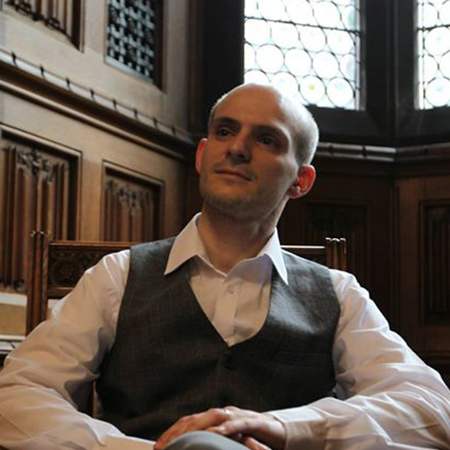
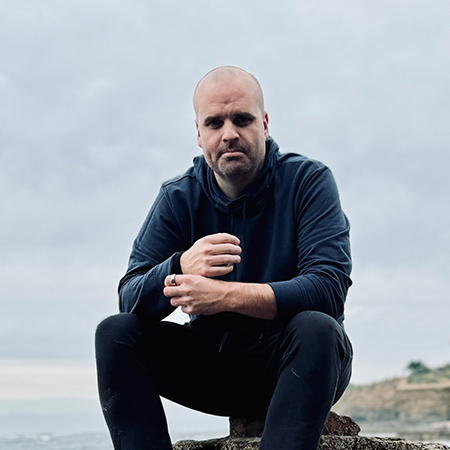
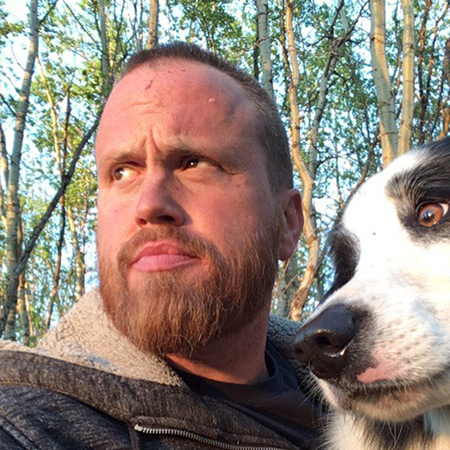
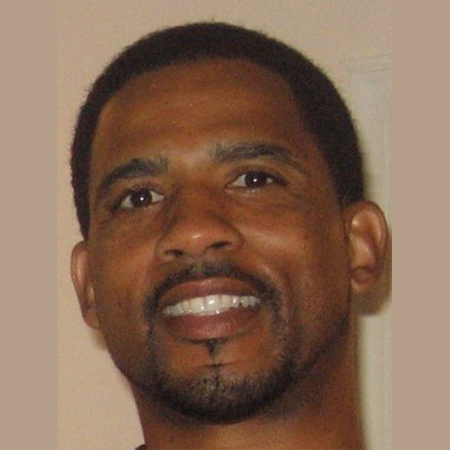
Daniel Holter, Richard Harris, Michael Laskow, and Dean Krippaehne at TAXI's Road Rally

(L to R) Daniel Holter (left) and Dean Krippaehne (center) look on as
Richard Harris fields a question during the panel.


Michael Laskow, Moderator


Part Two  |  Part One  |  Part Three


Daniel Holter is a producer, composer and owner of Burst Records in Milwaukee. Daniel has thousands of songs licensed every year on virtually all of the top shows and produces commercial music for such varied clients as Goldman Sachs, GM, Microsoft, GE, and Gatorade. He also had the lead single on Columbia Recording artist Emma Roberts with his song, "I Wanna Be," as a result of a deal he made through a TAXI listing.

Dean Krippaehne is a producer/songwriter/musician, with more than 100 songs with several production music libraries. His recent placements include the ABC soap One Life to Live and ABC Family's Lincoln Heights. 2008 has also brought Dean a Billboard Top 10 album and two gold records in Europe. His cuts include Stefanie Heinzmann, American Idol's Sarah Burgess and America's Got Talent's Sarah Lenore, among many others. Virtually all of Dean's deals have been the result of connections made through TAXI.

Richard Harris, a songwriter/producer, signed to Peer Music Publishing. He is currently writing for artists on Atlantic, Universal, Motown, and EMI Records. He has had great success with TV placements and commercials. Recent placements include One Tree Hill, The Closer and Cold Case. Richard has also been a TAXI member and recently joined our A&R team.

Daniel, how important is it for somebody who wants to succeed with film and TV music to learn what the market needs, and what's a good way to figure out what the market needs? Can you just create what pop into your head?
Daniel:
Yeah, I think you can if it's good music. But if you're starting out, it's more important to be doing things that people are asking for. My first product line, the Gravity Library, was started with two pieces that were rejected by our mutual friend Jim Long at One Music. So I had this initial deal with One Music in Nashville, and the first two pieces I sent him he was just like, "No, that's not going to work." And I knew that it was legit, really interesting stuff. And those ended up becoming the fist two cuts on my own product line, which is now 40 or 50 CDs, and that's the oldest one. That was 12 years ago since I did that.

How did you deal with the rejection from somebody who is the music library equivalent of Clive Davis?
Daniel:
He is a titan, there's no question.

So how did you deal with him saying, "No, it doesn't work," and yet you maintained the confidence that it would work for somebody somewhere?
Daniel:
I'm a stubborn fool about a lot of things. When I hear songwriters talking about you need to have thick skin… I look at politicians and I have no idea how those people can deal with the attacks that come their way. And criticism on art is really difficult to take. If you're starting out, it's the most important information you can take in. Taking all that to task, you still have to have a vision about what you're doing, and at some point, some people have a gift to make music and to be involved. Those people typically have a vision that is so strong that somebody is going to pick-up on it, buy it, use it, license it and pay you for it. If people aren't licensing it, paying you for it, or buying it over five or 10 years, and you've been consistently been told that it sucks, it's time to take the message. But this was the first rejection I got. So if I'm going to give up after one rejection, I'm in the way wrong business.

Surprisingly, we get a lot of TAXI members who will make one or two submissions and call up and ask for a refund. I so badly want them to know that most the deals that start happening for people really truly happen in the second and third years of their membership, because that's when they really learn the ropes. If they stick with it—even if they're only making one or two submissions a month—they learn more about what the industry is looking for, learn more how to handle rejection, and they learn how to become more productive. So did you sit there and watch TV at night and go, "Oh, now I get it. This is what they're looking for." Or did you just continue to do what you did and hope to find the right buyer.
Daniel:
My musical tastes are pretty diverse, and I've been passionate as long as I can remember about one thing, and that's music. So it was very much about being aware of what was going on. Before I got the deal with One Music, I had started a company with a voiceover… It's a really long story, but it was right when new-Rock radio happened, wherein, instead of the great big booming guys, it was the guy with the filtered stuff, with Nirvana, Alanis Morrisette, and that kind of music. Well, I was 22 at the time, and the people I was working for were 50 and 55, saying...

In fact, the first rejection letter I got from TAXI… I was a member 10 years ago. I remember the story now. I was one of the guys who dropped the membership because of a rejection letter. I was like, "Screw you, this music is awesome." I still have that letter. I should send you that letter. I totally forgot about that until just now. I didn't have a face attached to it. It was just some guy that didn't like my art who was saying, "You can't distort a drum loop. Be careful of the recording levels in the process, because you're distorting the drum loop." And I was like, "What are you listening to? It's all over modern music." This was '93 or '94. I wasn't the first one at the party; I was trying to follow what was happening on radio. So I was immediately like, "These guys have no idea what they're talking about." But I listen to it now and think probably it was too loud in the mix. It wasn't used tastefully. You know, there's a point at which you can distort a loop and use it intelligently. But I was 22, and I thought I knew everything, of course. But, I joined up again five or six years later. But I took that rejection to heart, just like I did with Jim Long's, and went, "No, I think this is really valid music that should be heard."

In a lot of ways I'm an anomaly in this business. Well, I'm not an anomaly, but this business now is completely different then it was 10 or 12 years ago when I started. I am really, really lucky to have recognized at 22 that I didn't want to be a rock star, and that I didn't have any of the moves or the skills or hair, or any of it. I did nothing to make that work. I was, in a lot of ways, in the right place at the right time. The door to entry into this niche of the business is way more crowded now than it was 10 years ago—by oodles!

You're talking about film and TV?
Daniel:
Yeah, specifically. That's the point of this, right? The licensing thing? It's a crowded entry now, because there were a lot of people, this mob, who were like, "Ooo, we're gonna get record deals. Oh, there are no record deals, let's go get a film and TV deal." I mean, I got really fortunate. I don't know if I'd be competing right now if I were just jumping in.

Well, it feels like the number of opportunities has grown geometrically as well because there are so many cable networks now and they all need music. Years ago, I sat down with a calculator and a legal pad one night and literally made a chicken scratch every time I heard a piece of music on whatever network I was on. I did that for an hour, then went to another network, did it for an hour, and another network and did it for an hour, then multiplied it times the 62 cable channels on my system, then multiplied that times 24 hours a day. It was unbelievable. Tens of thousands of pieces of music get used every day. Fox Sports alone uses 1.2 million tracks a year. And that's just one company. Mind-blowing!

Dean, you do mostly instrument stuff, or do you do stuff with lyrics as well? Do you prefer to do one over the other?
Dean:
My new favorite is instrumental, because so many libraries are taking that stuff from me. But I'm a song guy. Watching Mr. Dozier this morning, he set the bar. I still want to have 54 #1 hit songs. One of the things that I wanted to do—because not every song gets placed—was find a way to do this very affordably. The fewer people I have to hire the better. So, for instrumentals for a lot of genres, I don't have to hire anybody. I've got all the tools to produce all this stuff myself. So my cost is zero, and it's just the time that I spend that is my investment.

And you weren't trained as an engineer or producer really before this? You're all self-taught, home studio, much like the people in the room? How many of you in the audience have a home studio…? At least half!
Dean:
But now I've had a lot of opportunities for instrumentals, and I'm just jumping through those. My time is kind of split now, because I still want to do the song thing with lyrics—the hit song thing. But, man, the library thing is working so well for me right now. Some of them are songs with vocals, but I'd say probably 75% of the stuff I'm doing now is instrumental. Or, if somebody signs one that has vocals, they immediately want just the instrumental, or the score track for that too, because that's probably what's going to be used.

For me, just in speaking to something you were talking about earlier, I'm kind of getting into this thing during this time as it's changed from what it maybe was 10 or 15 years ago. Are there opportunities out there? Maybe there are a lot more people in this game, but it seems to me, as I keep developing relationships with different libraries and publishers, the opportunities once they find out and they like what I do—I just got contacted two weeks ago by a guy, a library, who I have a relationship with and who just got a new deal—I won't say who the particulars are. But they got a new deal and they need a specific genre of music that I do, and his comment to me was, "We need it by the truckload." So you know, I went cha-ching, and now I'm trying to back my truck up to my studio and fill it with that genre.

We were hanging out together in Nashville four or five months ago, and you told me that you try to do a track a day. How do you do a track in a day? I know so many musicians who say, "A track in a day—omigod, it takes me a week to do just one!" So how is it that you've been able to crank out-when you're at peak performance—a track a day? Answer that part, then I'll hit you with the second part of the question.
Dean:
An instrumental track a day. Writing lyrics and all that kind of stuff is a more time-consuming thing for me.

Oh, you don't get the lyrics on the first pass?
Dean:
No, on the 15th TAXI critique I get them. It didn't always go that fast for me. One of the things that has really sped things up for me is to learn my sounds in my studio— learn my samples, learn my drums, learn my basses, learn all that. So when I go to a particular genre now, I know the three basses that are going to work, the drum kit that's going to work, and I'm just right there with those. I'm not searching for sounds, and that has sped up my time from what maybe used to be 25 hours to do a track to eight hours or so to do a track for me to get it they way I want to get it. Yeah, one in a day.

That's miraculous but enviable at the same time. I forgot what the second half of the question is. I'll come back to you when I think of it. But I'm not going to let you leave the room without the ping-pong ball story, the short version. I alluded to it this morning in my keynote I think. It's such a great story, so start thinking now how you can get that down to two or three minutes, because it's well worth hearing.

Richard, you've seen my world—the TAXI world—from all sides now. You've seen it from the musician side; you've seen it from under our roof as a screener. If I had a dollar for every TAXI member who ever said to me, "I think what's on the radio sucks. I don't listen to radio anymore." And then they send in music that sounds very dated, that has nothing to do with today's market. If I had a dollar for every one of those, I'd be retired already. How do you stay current now that you're concentrating much of your effort writing stuff for major label projects for people and these young cutting-edge bands? How do you know what it is they're looking for? Do you listen to radio? Do you buy a lot of CDs?
Richard:
Absolutely. I mean, it's like any job. And it is a job, at the end of the day. You can put any sort of label on it, but this is what I get up and do every day. It's a job, and part of any job is doing your research and knowing the market you're working in. So you have to keep yourself current and listen to what's out there in the market place... Thankfully, now the access to music is just phenomenal. You don't have to go and troll CDs at Virgin and hope to God you buy the right new artist, or find something by accident that really turns you on that's new and current and maybe hasn't even hit yet. Now with MySpace and Rhapsody, and God knows what else, you can find music so easily. I like the new Genius function on iTunes—I just absolutely love it. You just play something and you hit the Genius button and it gives you 10 more artists you've never heard before and you check the music out.


“The trick is to maintain your own vision and your own uniqueness while trying to fit that into what's going on now, or even better, what's about to happen.”

– Richard Harris

I was having a chat in the mentoring session this morning, and they asked a similar sort of question about, you know, is it current? And it was, as far as I was concerned, it was there. The trick is to maintain your own vision and your own uniqueness while trying to fit that into what's going on now, or even better, what's about to happen. Because a lot of the time we're trying to write music that's not happening now, but is going to happen in six months or a year's time.

Absolutely. Most people don't realize that by the time they hear something on the radio, that it was probably conceived and recorded two years ago. How do you stay, not only on the cutting edge, but ahead of it?
Richard:
Well, I think the only way you can is rely on the fact that you are doing something that's unique, which will actually be the cutting edge. I don't think it's something you can think about and make happen. I think it's just something that you do in terms of your talent. That's the talent side of it; that's the creative side of it. Then, it's about the craft of it, trying to make it sound current. And there are obviously certain ways melodies are written nowadays that are not as they were 30 years ago. You know, for '70s music, the melody line sounded different. And I don't pay an awful lot of attention to that, but I have a good ear, so I hear things and it sinks in. So I listen to a lot of music. And I'm not just working in one genre either. I'm asked to write all sorts of things. I sit very much within a pop/rock sort of world, but I listen to everything. I love music, and I've never lost that, even though sometimes… You know, with some people, it's a lot like being a plumber: the last thing you want to do is go home and fix your own tap, you know what I mean? But I love listening to music; I listen every morning. When I get up in the morning and I'm checking e-mails, I'm listening to music all the time and I'm finding stuff and while thinking that while that's not what I would do; I like that production idea; I like the way it's doing something with a bridge, which I wouldn't have thought about; maybe I'll try that next time.

Do you keep a notebook of ideas when you run across something special like that?
Richard:
Oh, God yeah. I keep a lot of melodic ideas as well, on my phone, on my laptop, on my computer. I have several different quick, easy ways of just hearing something, and just literally recording it on the spot. So, yes, I'm always making notes. You can't stop learning—ever. That's the one good thing my dad taught me about life. My dad is a composer and an arranger...

Oh, so you cheated. You've got a genetic pre-disposition.
Richard:
Yeah. Well, my grandfather was a musician, so was my great-grandfather. It was inevitable, really. Back in the early '80s, when the first Macs were coming out—the Mac Classics—my dad was doing a lot of TV movies at the time. He did the first TV movie using an Apple Mac Classic and a Prophet Five and a Mini Moog. He did the whole score on that. Now, this is somebody who went from the pencil and paper, writing out charts for a full orchestra, then he saw that and he said to me—and he still does to this day, and he's 76 and still working—"Richard, never stop learning." He's reading manuals all the time. And that's great, because that's the nature of the business, you know? We've got to keep current; we've got to keep going.

Check out Part Three in Next Month's Transmitter!


=========================================================================


See How TAXI Works


"With help from you guys, the music is pouring out and I'm having such fun! Thanks!"
— Willie McCulloch,
TAXI Member


"TAXI provided real access to a nearly inaccessible industry."
— John Mendoza,
TAXI Member

"I received 5 critiques for one song and each one was right on the money. The critiques and this membership are priceless!"
— Tammy Endlish,
TAXI Member


"In this competitive field you need all the help you can get and with TAXI, you've got a friend in the music business."
— Richard Scotti,
TAXI Member

"I recently got my first deal as a result of a submission to TAXI! I'm very excited to see that this actually works!"
— George Leverett,
TAXI Member


"We appreciate all that you do and try to do to help us struggling songwriters!"
— Pat Harris,
TAXI Member

"I've known most of TAXI's A&R people for years. These are real industry pros. I'd be happy to listen to anything they send me."
— John Carter,
Vice President of A&R,
Island Records


"I am enclosing a check for my third year of membership in TAXI. You've got a great thing going, and it's fun being a member."
— Thomas Hipps,
TAXI Member

"With help from you guys, the music is pouring out and I'm having such fun! Thanks!"
— Willie McCulloch,
TAXI Member


"TAXI provided real access to a nearly inaccessible industry."
— John Mendoza,
TAXI Member

"I received 5 critiques for one song and each one was right on the money. The critiques and this membership are priceless!"
— Tammy Endlish,
TAXI Member


"I am enclosing a check for my third year of membership in TAXI. You've got a great thing going, and it's fun being a member."
— Thomas Hipps,
TAXI Member

"I think I'm lucky that I've found out about TAXI so early in my career."
— Djamel,
TAXI Member


"You are making an incredible difference in the lives of musicians and artists trying to break into the business!"
— Rob Khurana,
TAXI Member